Creative experiments
Colouring books with local AI
One on sale, another finishedCan AI help make a whole colouring book?
On this page
Where things stand
One colouring book is on sale and another is finished. My next goal is to speed up the production of high-quality colouring books.
I want the consistent illustration style, the story and the print-ready result to survive even as the production process becomes faster.
Making a single image with AI is relatively easy now. But what about a whole colouring book, with dozens of images, a consistent visual style and possibly a story too?
I wanted to find out whether a book like that could be designed, illustrated and prepared for publication on my own computer.
This project combines generative AI, visual design, storytelling and the practical work of publishing.
Nordic life to colour in
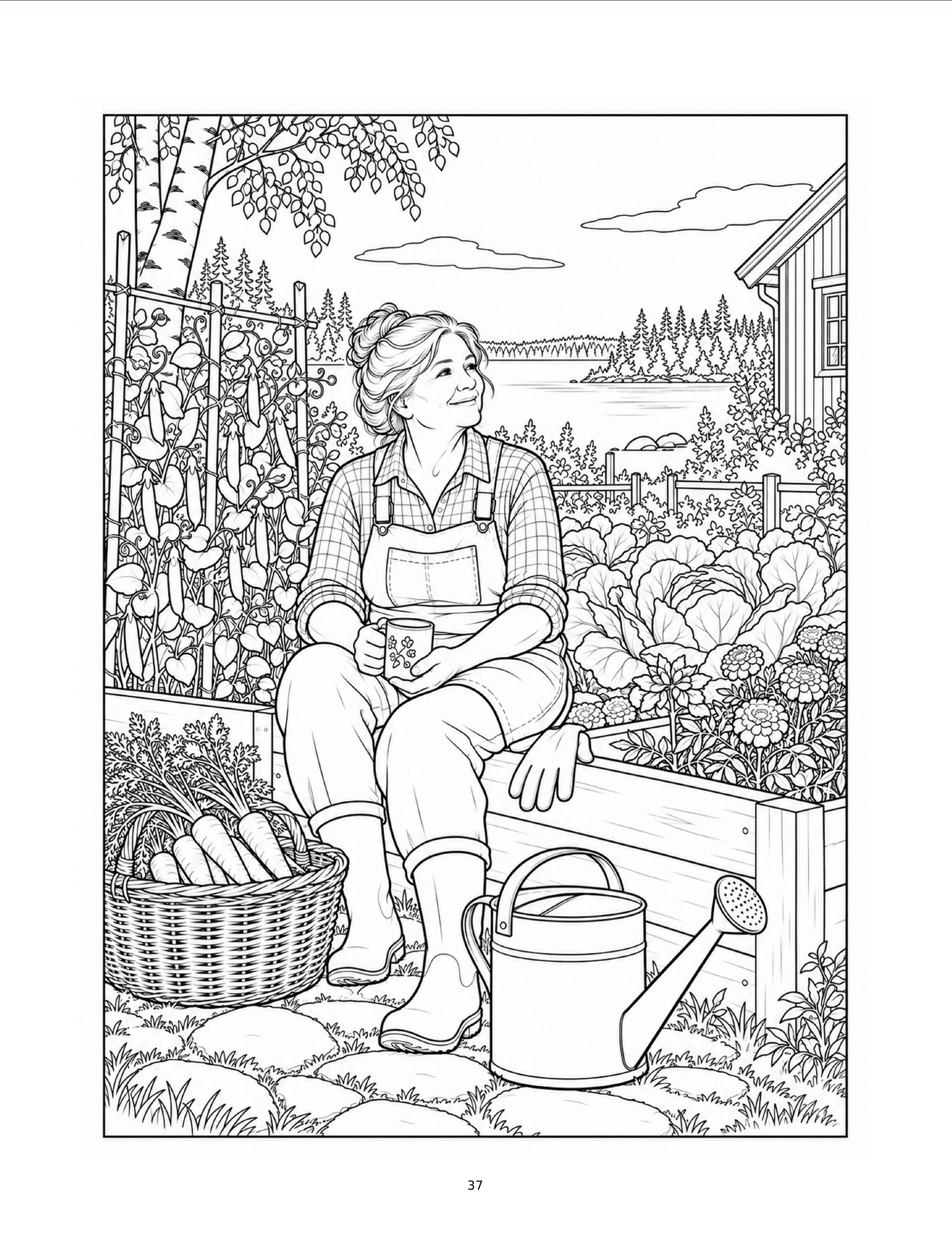
My first book project is Northern Living: A Cozy Nordic Adult Coloring Book, depicting everyday Nordic life across the four seasons.
The plan calls for 40 detailed black-and-white colouring images. They need to work as pages people can actually colour, rather than just look good on a computer screen.
That means things like clear outlines, the right amount of detail, print-ready resolution and a consistent illustration style.
Can a colouring book tell a story?
Next, I became interested in the idea of a colouring book that could also be a story.
That led to the Emotional Storyworlds concept, in which individual colouring images form a coherent narrative.
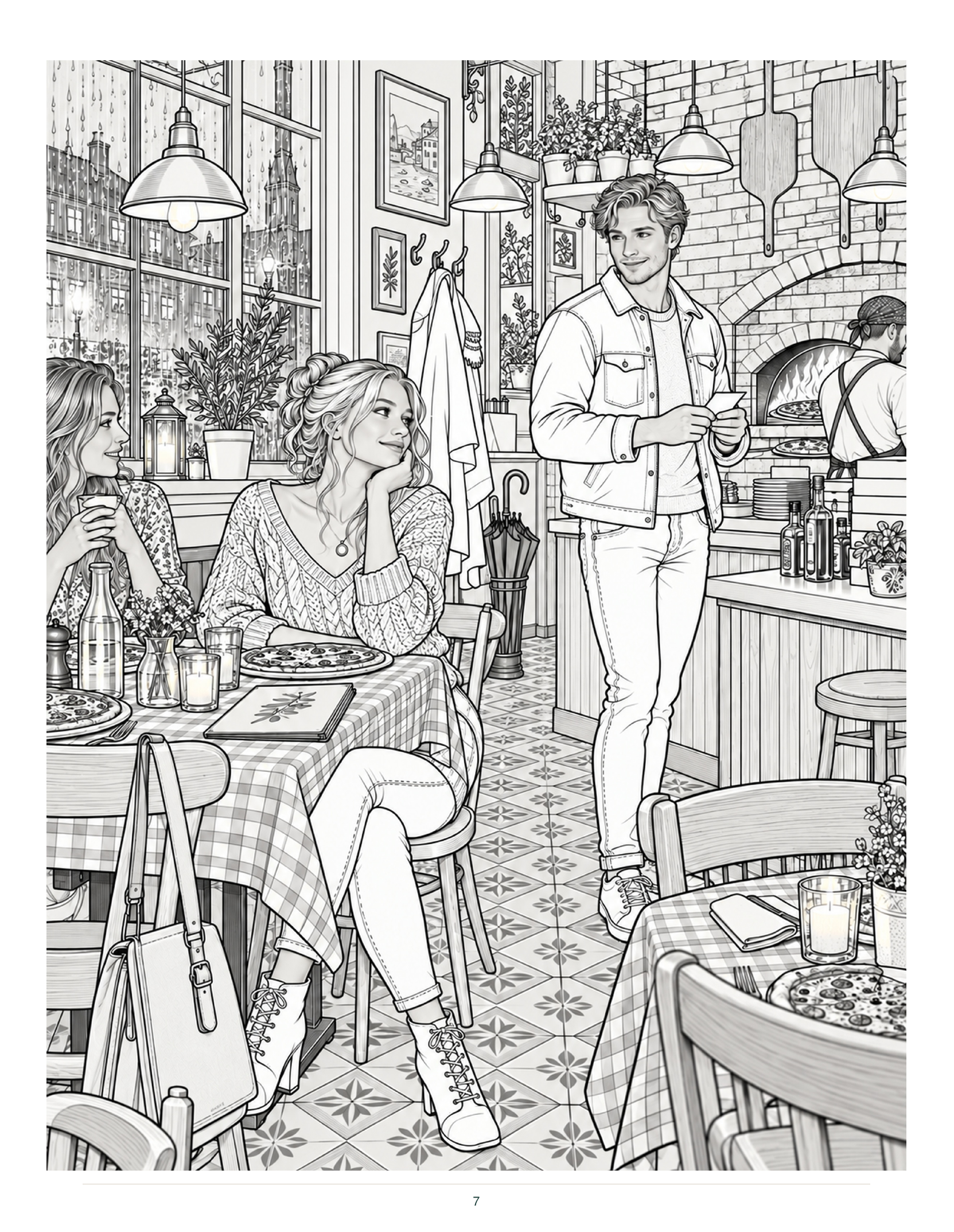
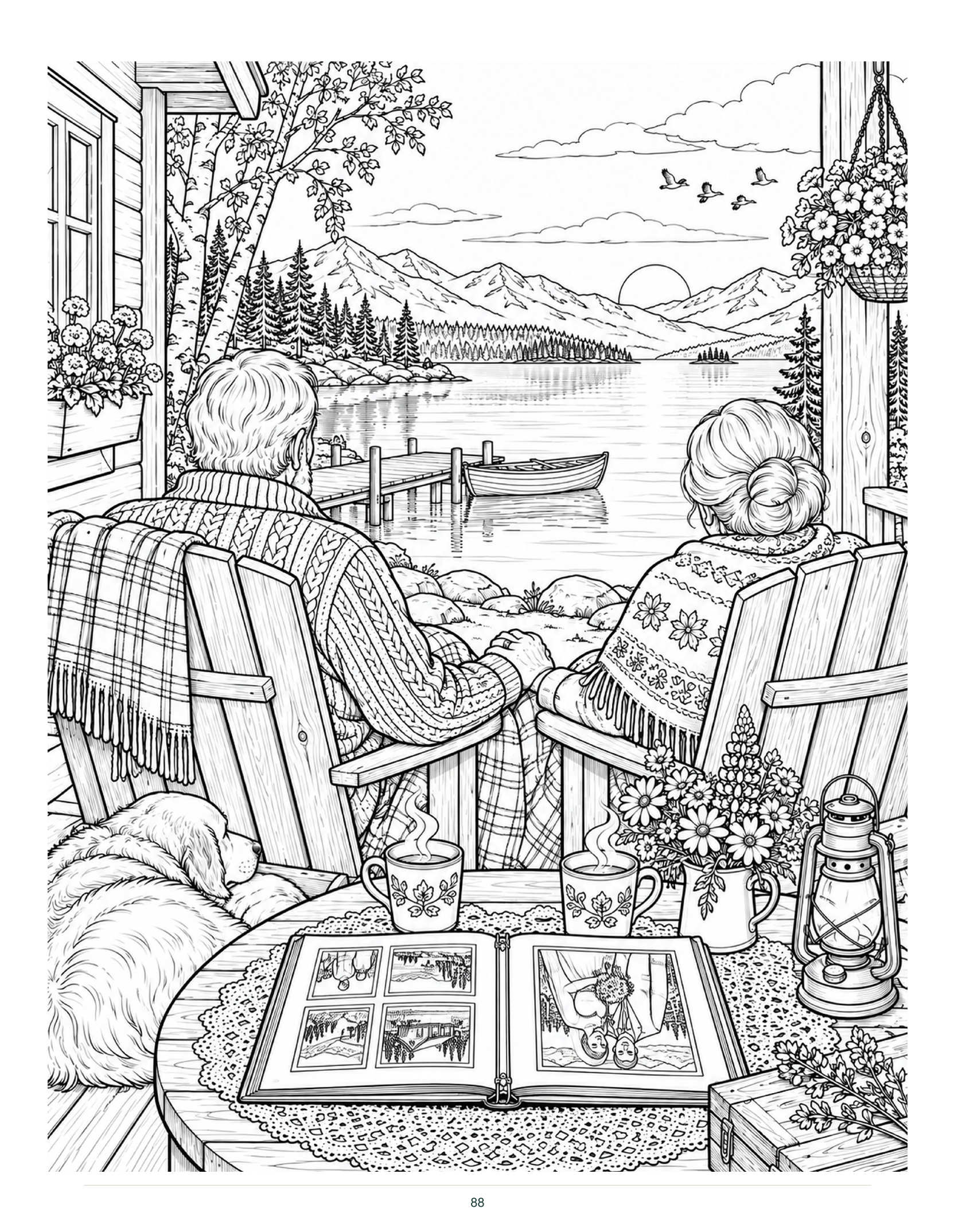
The first planned book, The First Time It Was Us, would tell a love story from a first meeting to the later stages of a shared life.
The aim isn't simply to fill a book with the right number of images. Each image should move the story forward while offering an interesting scene to colour.
How I make them
I'm experimenting with local image generation models and ComfyUI workflows. I want to understand how to produce sufficiently consistent images and manage their quality.
Generating images isn't enough on its own. Making a book also involves choosing images, correcting errors, laying out pages, meeting print requirements and preparing for publication.
One of the most interesting questions is how much of the process can be automated without losing quality in the final result.